The journal
Caffeine and L-theanine for focus: what the evidence shows
Reviewed 12 July 2026 · Educational content, not medical advice.
Short answer: caffeine reliably improves alertness and aspects of attention, while L-theanine may change how that stimulation feels and performs. Human trials of the pair report benefits on selected attention tasks, but the size of the effect varies and not every outcome improves.
What caffeine does
Caffeine is an adenosine-receptor antagonist. In plain language, it reduces the pressure of the brain’s “tired” signal for a few hours. A 2025 systematic review and meta-analysis of 31 randomized, double-blind trials in healthy adults found small improvements in both attention accuracy and reaction time. Higher was not always better: accuracy followed a curved dose-response relationship rather than improving endlessly with dose.
That matters because a label saying “energy” tells you very little. The useful questions are: how many milligrams, at what time, and alongside what else?
What L-theanine adds
L-theanine is an amino acid associated with tea. A randomized crossover trial using 97 mg L-theanine with 40 mg caffeine found better performance on a task-switching test than placebo, while subjective alertness and another attention measure did not improve significantly. This is a good example of why “supports focus” should not be translated into “improves every kind of cognition.”
A 2025 systematic review and meta-analysis found small-to-moderate differences favouring theanine plus caffeine on several cognition and mood outcomes during the first two hours, but the confidence intervals often showed substantial uncertainty. The responsible conclusion is promising, task-specific evidence—not a guarantee.
Is there a proven perfect ratio?
No universal ratio has been established. Studies use different doses, tasks, participant groups and timing. The familiar “two parts theanine to one part caffeine” idea is a practical formulation pattern, not a law established across all people.
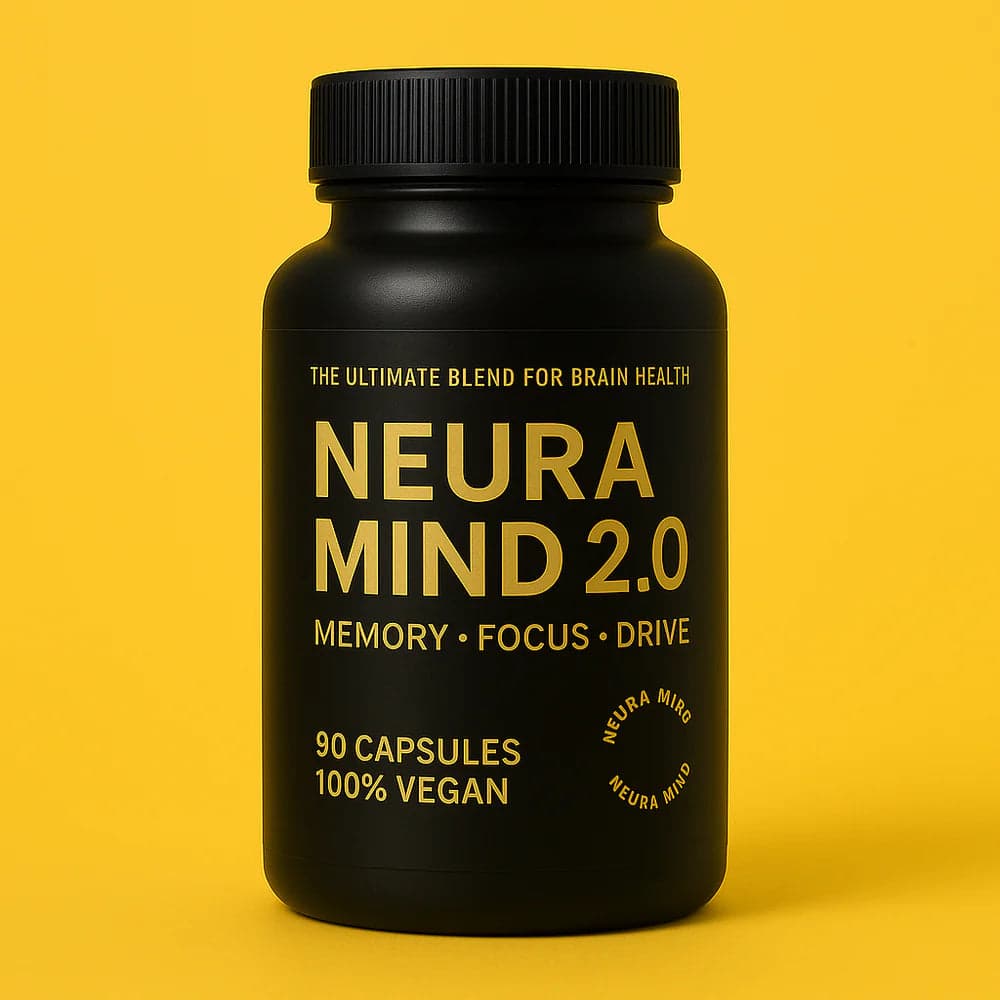
NEURA MIND 2.0 prints 80 mg caffeine and 200 mg L-theanine per serving. That is a 1:2.5 caffeine-to-theanine ratio. It is close to ratios used in some research traditions, but the finished product itself has not been tested in the cited trials, and its 27-ingredient formula should not be represented as if it were the same intervention.
How to judge a caffeine-theanine product
- Reject labels that do not disclose the caffeine amount.
- Add up caffeine from coffee, tea, pre-workout and the supplement.
- Check whether L-theanine has an exact amount or is buried inside a blend.
- Take stimulant timing seriously; late caffeine can interfere with sleep.
- Judge your response across several ordinary workdays, not one unusually good or bad day.
Who should be cautious?
Caffeine can cause restlessness, palpitations, anxiety, stomach upset or sleep disruption. People who are pregnant or breastfeeding, under 18, sensitive to stimulants, living with a medical condition, or taking medication should speak with a qualified clinician before using a stimulant supplement. Never use supplements to push through severe sleep loss or replace prescribed care.