The journal
Caffeine-free nootropics: what to compare before you buy
Reviewed 13 July 2026 · Educational content, not medical advice.
A caffeine-free nootropic is not automatically weaker, safer or better. It simply removes one major stimulant variable. That can make sense for people who already use coffee, are sensitive to caffeine or want a formula that is easier to separate from sleep timing.
When a caffeine-free route may be practical
- You already know your total caffeine from coffee or tea.
- You work or study later in the day.
- Caffeine causes jitteriness, palpitations or sleep disruption for you.
- You want to assess non-stimulant ingredients without an immediate caffeine effect dominating the experience.
People can still react to botanicals, amino acids, vitamins or other ingredients. Medication interactions and medical conditions remain relevant.
Do not expect an instant caffeine-like signal
Many non-stimulant ingredients are studied over weeks rather than minutes. Bacopa trials, for example, generally use longer supplementation periods. Human research on lion’s mane in healthy younger adults remains limited; small pilot trials are useful signals for more research, not grounds for certainty.
A broad systematic review of cognitive-supplement ingredients in healthy adults described the evidence as low-certainty, inconsistent and often methodologically limited. The right expectation is therefore an auditable experiment—not a guaranteed transformation.
Five label questions
- Does the formula explicitly state zero caffeine?
- Is every active amount printed rather than hidden in a blend?
- Are botanical species, plant part, extract ratio or standardisation shown where relevant?
- Does the marketed time frame match the research time frame?
- Can you identify warnings, recommended use and the responsible business?
How Awareness Stack fits this lane
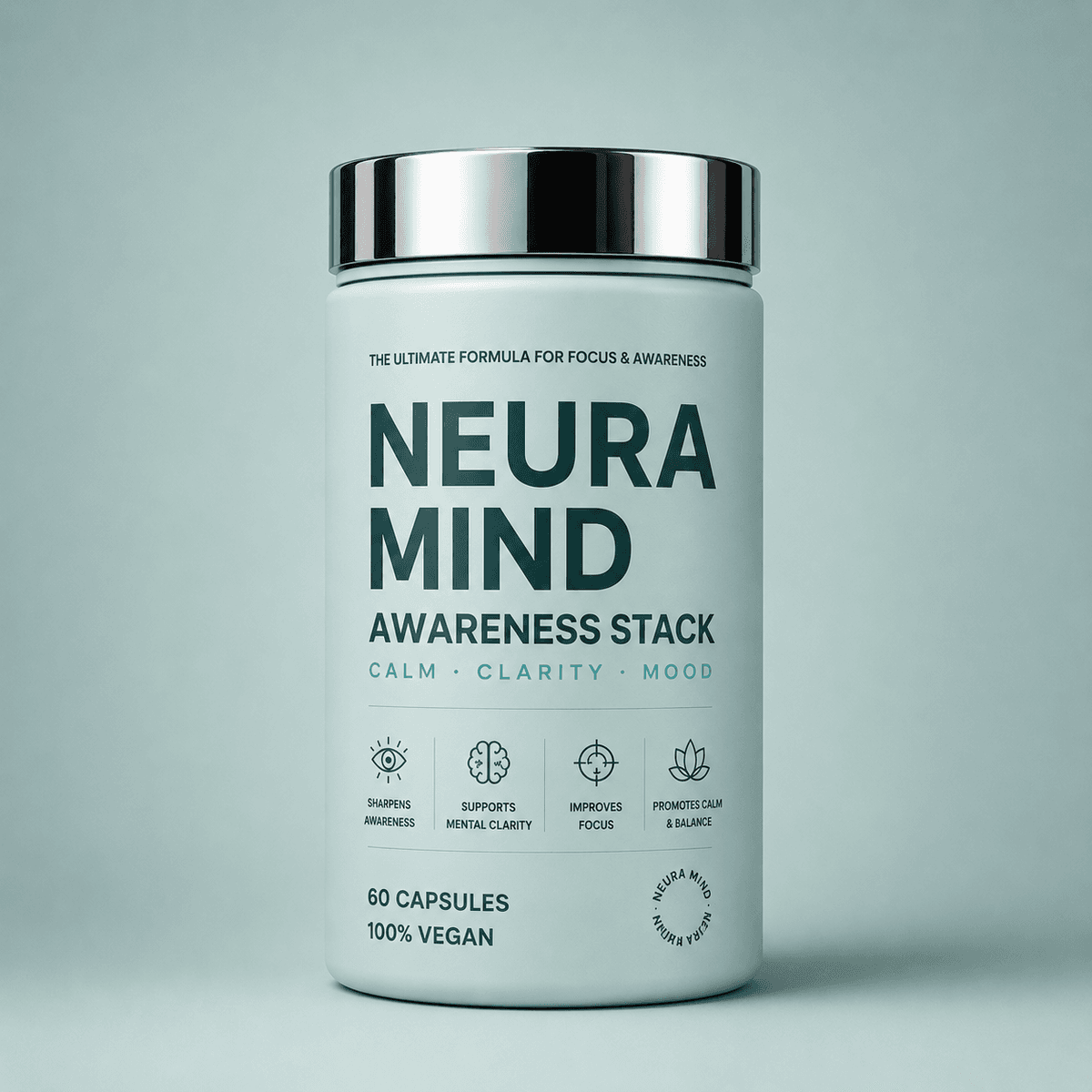
Awareness Stack is NEURAMIND’s caffeine-free option. Its product page publishes the complete active label and pack options. The presence of citicoline, lion’s mane, bacopa and other ingredients does not mean the finished combination has reproduced every isolated-ingredient study.
If you want a daytime caffeine formula instead, compare NEURA MIND 2.0. The key advantage of the system is that the stimulant choice is visible before checkout.
How to test your own tolerance responsibly
- Change one part of your routine at a time.
- Follow the label; do not double a serving because the effect is subtle.
- Track sleep, stomach comfort, headaches and other unwanted effects.
- Stop and seek qualified advice if you experience a concerning reaction.
Sources
- Systematic review of dietary supplement ingredients for cognitive performance in healthy adults.
- Systematic review of randomized Bacopa monnieri trials.
- Pilot randomized trial of lion’s mane in young adults.
Related: citicoline evidence and label doses.